> Development > Disaster Management


Janzimukh Gaon, Dibrugarh
When the Buridehing River rose on July 19, it took eleven days before the people of Janzimukh Gaon in Assam’s Dibrugarh district could walk out of their village again. Until then, the only way out was by boat locally known as Tulunga Nao.
The Tulunga Nao, a narrow country boat carved from a single log, is what villagers here have relied on for generations whenever the roads disappear under floodwater. Rowed by hand, usually by one or two people standing or crouching at either end, it carries only a handful of passengers or a modest load of goods at a time. Over the eleven days, it was used for everything: ferrying people between homes, taking children to whatever dry ground remained, bringing back drinking water from distant tubewells and carrying whatever relief supplies reached the village.
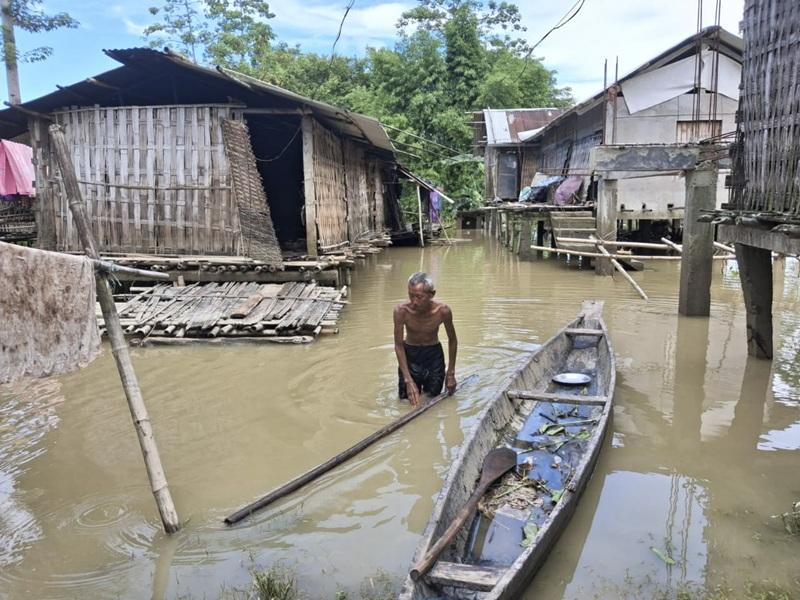
Photo: Rajib Dutta
Janzimukh Gaon, a Mising community village of 99 families and 575 people, sits 42 km from Dibrugarh town. Most homes are built as Chang Ghars or Taleng Ukum, traditional stilt houses raised eight to twelve feet above the ground on bamboo or wooden poles. The design is meant to keep families above the seasonal floodwaters of the Brahmaputra and its tributaries. This year, several residents said, the water rose higher than usual and reached inside these raised homes.
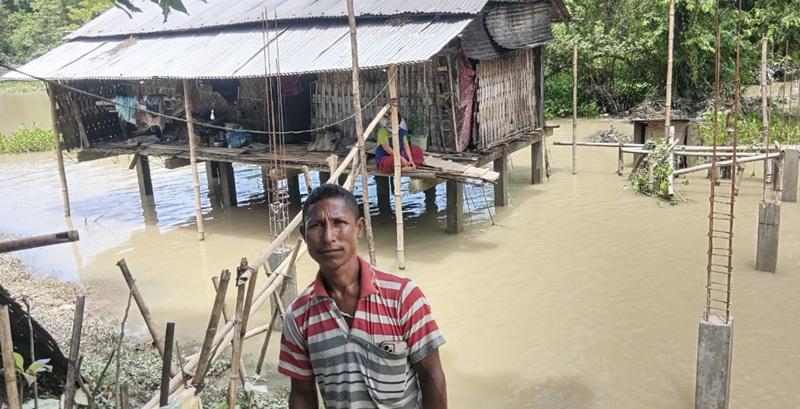
Photo: Rajib Dutta
Chandika Bori, 52, said the flood arrived faster than she expected. "I have seen floods every year since I got married into this village, but I never had to watch my own kitchen go under ten feet of water," she said. "On the first night, the water rose so fast we barely had time to move our things onto the machan (loft). By the second day it had crossed ten feet and come inside the house, and it spoiled our rice and our clothes. Even after the water dropped a little, we still couldn't leave our compound without a boat. Our tubewell stayed underwater for days, so someone from the family had to go by boat every day just to bring back drinking water."
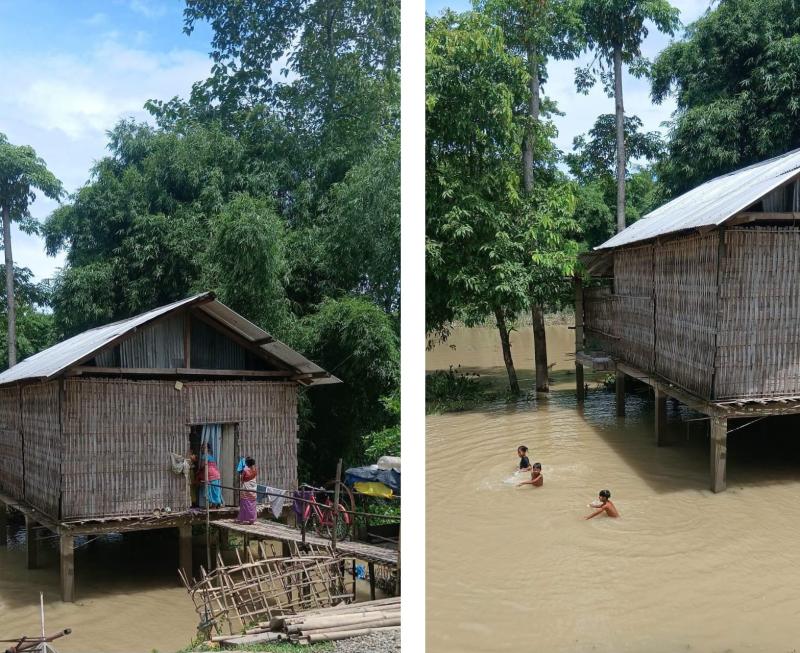
Photo: Rajib Dutta
Nilima Tayeng, 48, described a similar situation, with her house surrounded by water on all sides and no dry ground nearby for days. Sabitri Taye, 36, said the flood also affected her family's food stock. "Our granary went completely underwater, so the paddy we had stored was gone," she said. "Some officials came one evening with a small package, rice, dal, salt and a little mustard oil. We were thankful, but that was the only time anyone came in eleven days. That amount doesn't last a family a week, let alone until the water goes down for good."
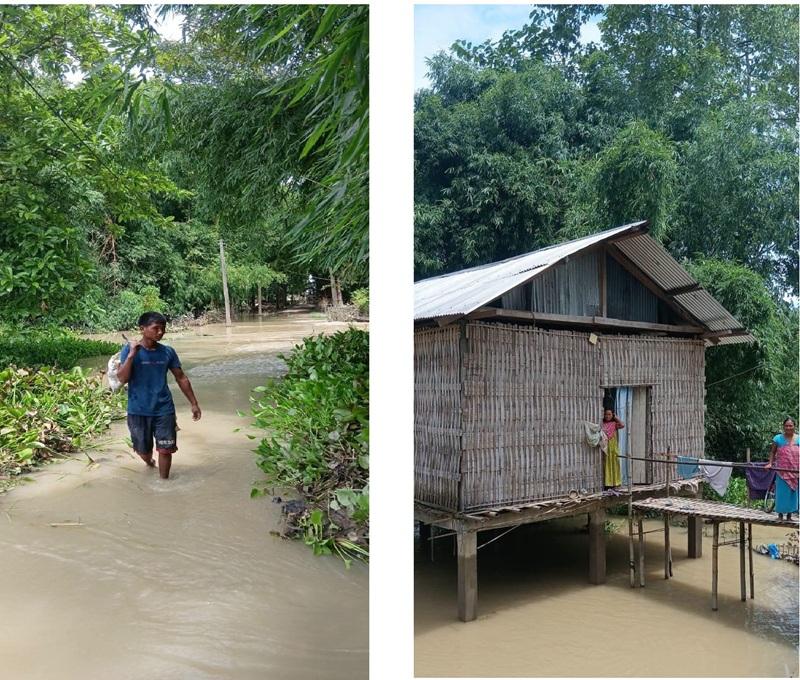
Photo: Rajib Dutta
Kushal Panging, 59, lives with a joint family of 13. He said this year's flood was harder to manage than usual. "The river rising every year is nothing new for us," he said. "But this time it came faster and stayed higher than last year. With so many people in the house, cooking outside on the embankment and sending someone far to fetch water, it took more effort than usual to keep everyone fed."
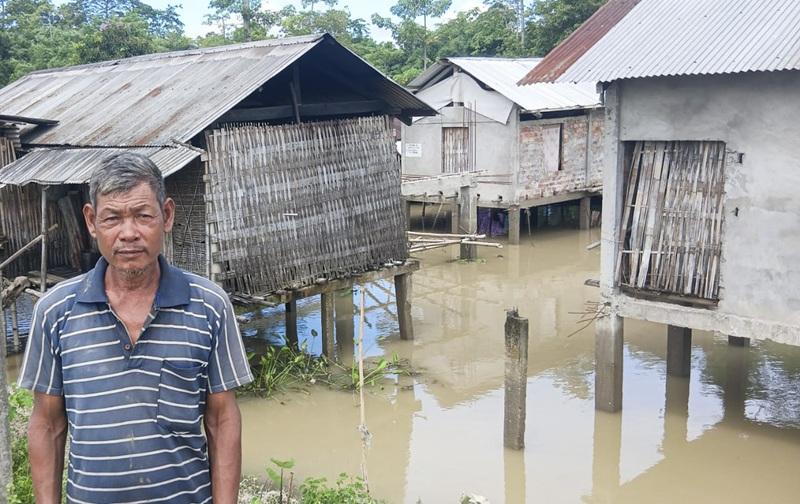
Photo: Rajib Dutta
Older residents compared this year's flood to past ones. Anil Panging, 55, said the flood of 1988 remains the worst he can remember. Bhimbor Panging, 68, agreed but said this year brought its own damage. "There was no electricity the whole time the water was high, and we lost some livestock before it started to recede," he said. "Our fields went under completely. Once that happens, there isn't much to do except wait."
Other families managed the flood in similar conditions. Anima Panging, 56, stayed with three sons and five family members through the eleven days. Jibanti Pangning, 42, did the same with a household of six.
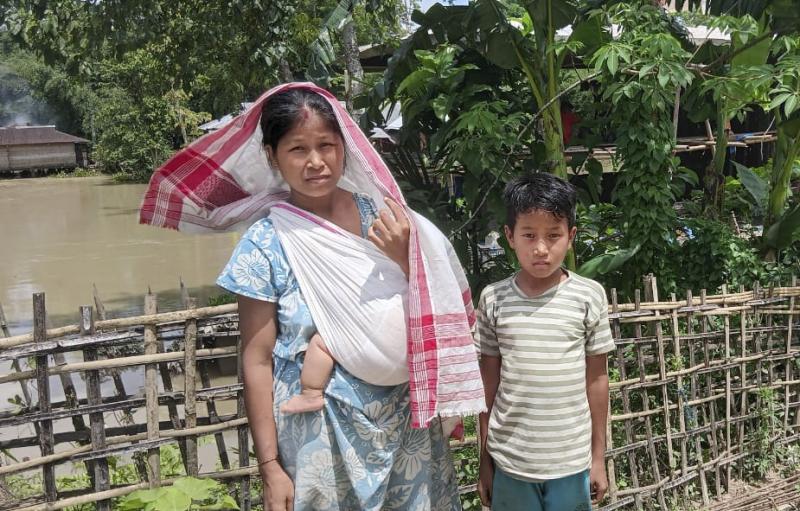
Photo: Rajib Dutta
The flooding in Janzimukh Gaon was part of a larger pattern across the district. According to official figures, 85 villages in Dibrugarh were affected this season, impacting 13,390 people. Of these, 22 villages fall under Dibrugarh West Revenue Circle, including Janzimukh Gaon, one of the worst-hit.
The water has since receded, but Janzimukh Gaon's residents say the damage will take much longer to undo. Homes still carry the waterline, fields are yet to be cleared of silt and the lost grain remains unreplaced.
 Navigations
  Quick Contact
 Subscribe Us
 Quick Mail